

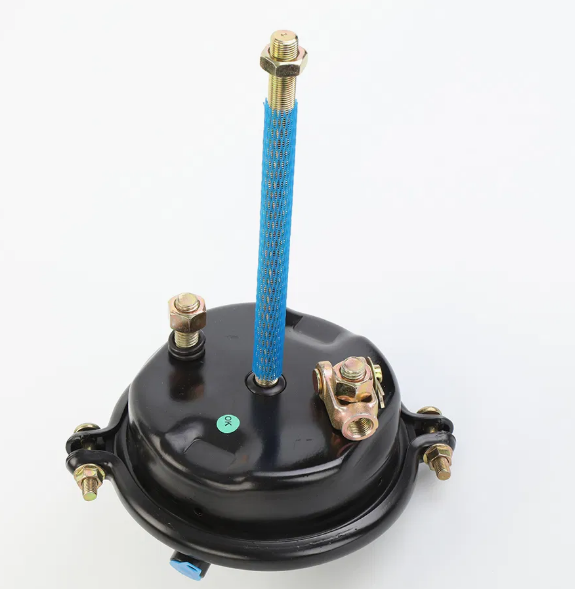
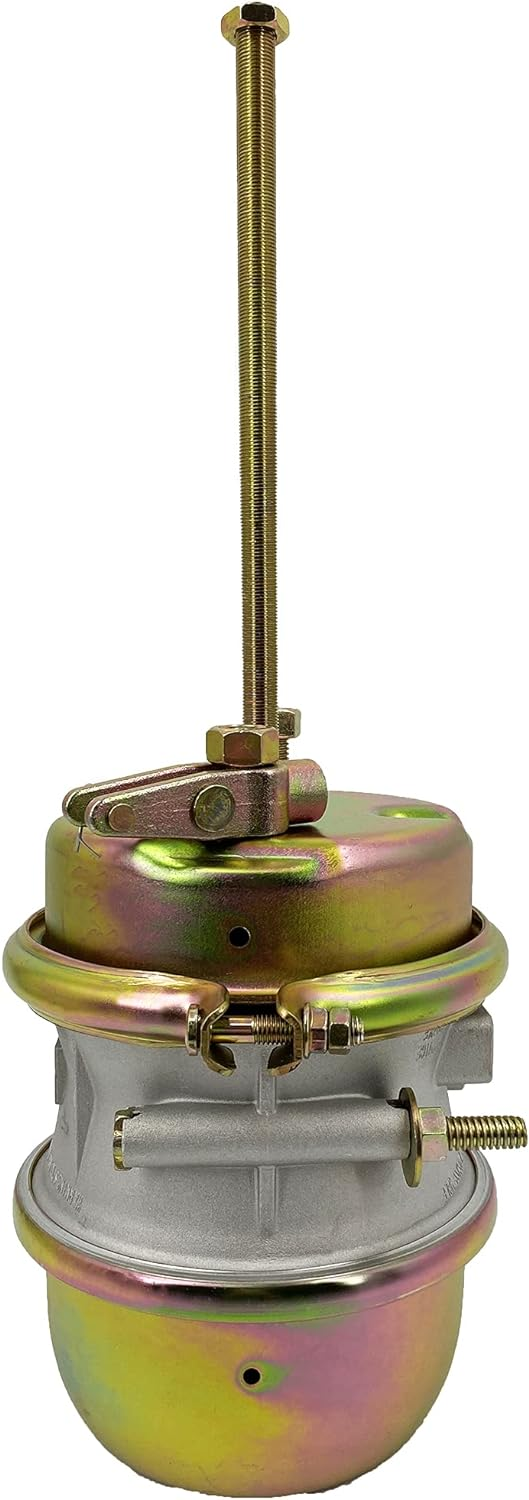
Brake Chamber
The spring brake chamber is a key component of an automotive braking system, primarily used to convert compressed air pressure into mechanical force to achieve the vehicle’s braking function.
Fulemu offers a variety of brake chambers for different vehicle brands: Japanese trucks, American trucks, European trucks, Chinese trucks, and Russian trucks.The following is a detailed introduction to the spring brake chamber:
The spring brake chamber is a key component of an automotive braking system, primarily used to convert compressed air pressure into mechanical force to achieve the vehicle’s braking function.
Fulemu offers a variety of brake chambers for different vehicle brands: Japanese trucks, American trucks, European trucks, Chinese trucks, and Russian trucks.The following is a detailed introduction to the spring brake chamber:
1. Structural Components
Housing: Typically made of stamped or cast steel sheet, forming the outer shell of the chamber, housing internal components and bearing air pressure and braking force.
Diaphragm/Piston: Diaphragm-type brake chambers use a rubber diaphragm, while piston-type chambers use a metal piston, used to separate different chambers and transmit air pressure force.
Spring: The energy storage spring is the core component, used to store energy and provide braking force when air pressure is released.
Pushrod: Connects the diaphragm or piston to the brake adjusting arm, transmitting the force generated by the spring or air pressure to the braking mechanism.
Connecting Fork and Adjusting Arm: Connects the brake chamber to the wheel brakes, realizing the transmission of braking force and the braking effect.
2. Working Principle
Service Braking: When the brake pedal is depressed, compressed air enters the diaphragm chamber or piston chamber of the brake air chamber, pushing the diaphragm or piston to move, compressing the spring and extending the push rod. This, through the brake adjusting arm, drives the brake cam to rotate, causing the brake shoes to press against the brake drum, generating braking torque and slowing the vehicle to a stop.
Parking Braking and Emergency Braking: When parking or emergency braking is needed, the hand-operated valve opens, releasing the compressed air in the spring chamber of the brake air chamber. The energy storage spring releases energy, pushing the piston or diaphragm to move, extending the push rod and generating braking force. Even in the event of a faulty air pressure system or insufficient air pressure, the vehicle can be safely stopped.
Manual Brake Release: In the absence of compressed air, the spring can be mechanically compressed by rotating the loosening bolt, causing the push rod to return to its original position, releasing the brake and facilitating vehicle movement or maintenance.
3. Type Classification
Diaphragm Spring Brake Chamber: Simple in structure and low in cost, suitable for light vehicles or scenarios with low braking force requirements. The diaphragm deforms to push the push rod; the braking force is relatively small, but the response speed is fast.
Piston-type spring brake chamber: Large pushrod stroke, strong braking force, suitable for heavy-duty trucks, buses, and other large vehicles. Good sealing performance between the piston and housing, able to withstand high air pressure, but complex structure and higher cost.
Combined spring brake chamber: Combines diaphragm braking and spring braking functions, consisting of a diaphragm chamber (service brake) and a spring chamber (parking/emergency brake). The two parts work independently, balancing the sensitivity of the service brake and the reliability of the parking brake.
4. Technical Parameters
Rated pressure: Generally 800KPa±35KPa, ensuring sufficient braking force under normal operating pressure.
Operating temperature: Typically -40℃~+80℃, adaptable to various harsh environmental conditions.
Pushrod stroke: The pushrod stroke of both the service brake chamber and parking brake chamber is generally ≥64mm to ensure braking effect.
Braking Force: Depending on the vehicle model and application, the braking force ranges from several thousand Newtons to tens of thousands of Newtons. For example, the force of the deflation brake push rod can reach 11,000 N ± 800 N.
5. Application Scenarios: Spring brake chambers are widely used in commercial vehicles such as trucks, buses, trailers, and construction machinery, and are a key component ensuring vehicle braking safety. In long-distance transportation, urban public transportation, and logistics distribution, their reliability and stability directly affect driving safety and operational efficiency.
6. Precautions:
Spring brake chambers are high-pressure components and should not be disassembled by non-professionals to avoid danger.
Regularly check the sealing of the brake chamber, the push rod stroke, and the braking force to ensure the braking system is working properly.
When replacing brake chambers, select products that match the vehicle model and specifications, and have them installed and adjusted by professionals.
