

Brake Shoe
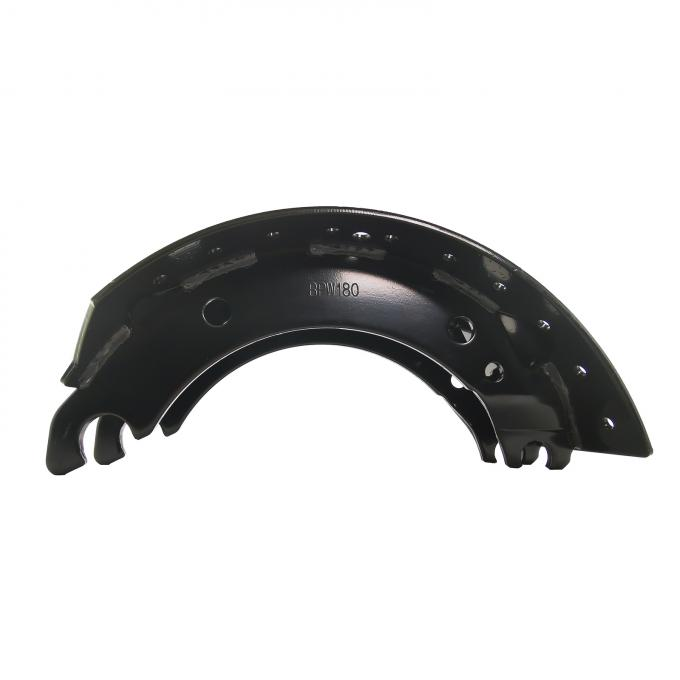
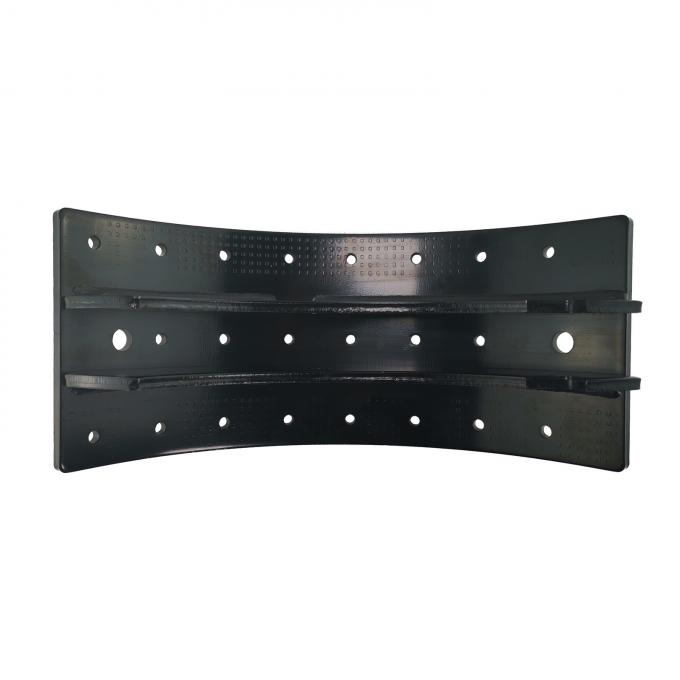
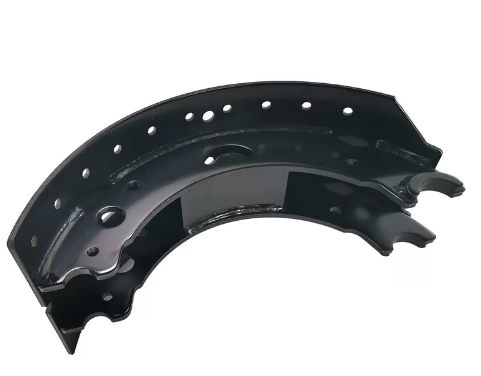
Steel stamped brake shoes are durable, lightweight components for drum brake systems, manufactured by shaping steel sheets via high-precision stamping and welding. Mainly made of sheet metal (usually high-quality steel A345 or Q235, known in the US as ASTM A572 Gr 50 or ASTM A36) through stamping and welding processes, the brake shoe is the main structural part of the brake shoe. It supports and fixes the friction pads and transmits the braking force to the brake drum, thus realizing the vehicle’s braking function. These shoes, often featuring induced hardened cam/anchor ends for durability and E-coating for corrosion resistance, are designed for heavy-duty, consistent performance in commercial vehicles. They are commonly used in S-cam air brake systems.
Steel stamped brake shoes are durable, lightweight components for drum brake systems, manufactured by shaping steel sheets via high-precision stamping and welding. Mainly made of sheet metal (usually high-quality steel A345 or Q235, known in the US as ASTM A572 Gr 50 or ASTM A36) through stamping and welding processes, the brake shoe is the main structural part of the brake shoe. It supports and fixes the friction pads and transmits the braking force to the brake drum, thus realizing the vehicle’s braking function. These shoes, often featuring induced hardened cam/anchor ends for durability and E-coating for corrosion resistance, are designed for heavy-duty, consistent performance in commercial vehicles. They are commonly used in S-cam air brake systems.
Manufacturing Process
Stamping: High-precision stamping dies are used to stamp steel into basic shapes such as flat plates and vertical plates, ensuring dimensional accuracy and shape consistency.
Welding: Components are welded together using resistance welding, seam welding, or argon arc welding. Strict control of welding parameters, such as current, voltage, and welding speed, is required during welding to guarantee weld quality and strength.
Quality Inspection: Multiple quality inspection processes are conducted during production, including dimensional inspection, hardness testing, and weld inspection, to ensure the product meets relevant standards and quality requirements.
Key Features and Benefits
Manufacturing Process: High-precision stamping shapes metal sheets, followed by welding, and sometimes coining to correct distortion and improve structural strength.
Durability: Induced hardened cam and anchor ends prevent “mushrooming” and ensure long-term durability.
Performance: Stamped steel construction provides high thermal conductivity, helping to dissipate heat efficiently and reduce brake fade, making them ideal for heavy-duty applications like commercial trucks and buses.
Corrosion Resistance: E-coating is typically applied to protect against environmental conditions.
Common Applications
Commercial Vehicles: Widely used in heavy-duty trucks and buses.
Industrial Machinery: Sintered metal variations are used for extreme pressure/temperature applications.
Structure of a Brake Shoe
Shoe Web: The center rib that provides structural integrity.
Lining Table (Rim): The curved surface where the friction material is attached.
Anchor Ends: Hardened points for attachment and pivot.
Maintenance and Identification
Regular Inspection: Regularly inspect the wear of the polished shoe, the quality of the welds, and the tightness of the connecting parts to promptly identify and address any potential problems.
Replacement Timing: When the polished shoe is severely worn, cracks appear in the welds, or the connecting parts become loose, replace it immediately to ensure the safety and reliability of the braking system.
