

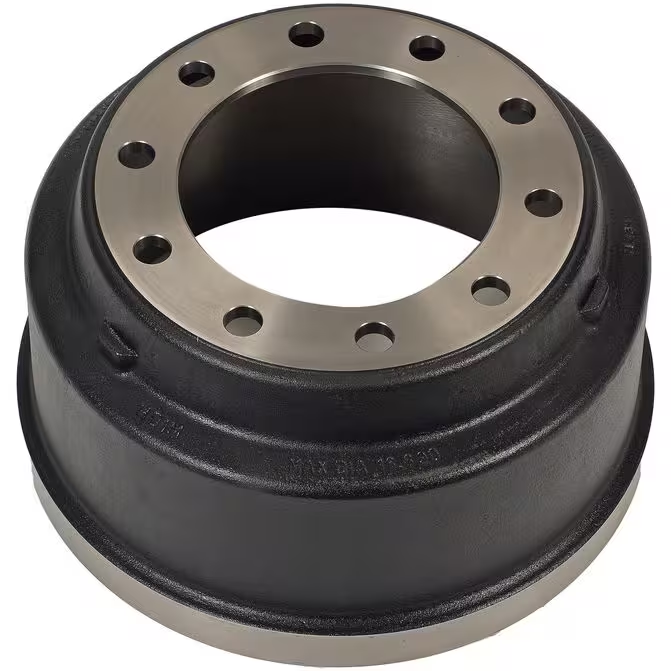
Brake Drum
Truck brake drums are key components of the truck braking system, carrying the important mission of ensuring driving safety. They convert the vehicle’s kinetic energy into heat through friction with the brake shoes, thereby achieving deceleration or stopping, and serve as the core guarantee of the truck’s braking performance. In the market common brake drum most made by grey casting .
Truck brake drums are key components of the truck braking system, carrying the important mission of ensuring driving safety. They convert the vehicle’s kinetic energy into heat through friction with the brake shoes, thereby achieving deceleration or stopping, and serve as the core guarantee of the truck’s braking performance. In the market common brake drum most made by grey casting .
Cast brake drums are heavy-duty, cylindrical components crucial for vehicle braking systems, primarily manufactured by pouring molten gray iron (often Class G3000/HT250) into sand molds. These drums, common on rear axles and commercial vehicles, provide a durable friction surface that resists wear, heat, and corrosion. The process includes casting, centrifugal bonding for composite drums, machining, and strict quality control to ensure structural integrity
Key Aspects of Casting Brake Drums
Material: Primarily gray cast iron, known for excellent castability, high heat conductivity, and vibration damping capacity.
Production Method:
Sand Casting: Conventional method where molten iron is poured into a sand mold.
Centrifugal Casting: Often used to create a strong, durable, and lighter composite brake drum by bonding molten iron into a steel shell.
Manufacturing Steps:
Melting & Smelting: Preparing the raw materials.
Pouring: Injecting molten iron into the prepared mould.
Shakeout & Cooling: Removing the casting from the mould.
Machining: Boring and turning to create a precise inner surface.
Types of Drums:
Full Cast Iron: Solid, heavy, and durable.
Steel Shell (Composite): A lighter, 15-20% reduced weight alternative, often used for increased payloads.
Vermicular graphite cast iron: this brake drums improve thermal fatigue resistance and thermal conductivity by precisely controlling the graphite morphology.
Quality Standards: To ensure safety, castings must avoid defects like porosity or blisters.
.Key Performance Indicators of Brake Drums
Braking Performance: Brake drums must provide sufficient friction to ensure rapid braking of the vehicle at different speeds and loads, with braking distances meeting safety standards.
Thermal Stability: Under continuous braking or downhill conditions, brake drums must effectively dissipate heat to prevent overheating that could lead to decreased braking performance (heat fade) or material damage.
Wear Resistance: Over long-term use, friction between the inner wall of the brake drum and the brake pads causes wear. Brake drums with good wear resistance can extend service life and reduce maintenance costs.
Strength and Reliability: Brake drums must withstand the enormous impact and thermal stress during braking, ensuring they do not crack or deform under extreme conditions, thus guaranteeing driving safety.
Inspection and Maintenance
Inspect for Wear: Observe the wear marks on the inner wall of the brake drum. If the wear exceeds the limit, replace it promptly.
Clean Debris: Regularly remove dust, oil, and debris from the surface of the brake drum to avoid affecting braking performance.
Adjust Brake Clearance: According to the vehicle owner’s manual, regularly adjust the clearance between the brake pads and the brake drum to ensure sensitive and reliable braking
